
Small Business Marketing helps local and growing businesses reach the right customers, build brand awareness, and create consistent opportunities for growth.
Running a small business today is not only about offering a good product or service. It is also about making sure the right people can find your business, understand what you offer, and trust your brand. Customers now use search engines, social media, websites, online reviews, and digital platforms before making many buying decisions. This creates a valuable opportunity for small businesses to reach customers beyond their immediate location.
Small Business Marketing is the process of promoting a business through a combination of online and offline strategies to attract potential customers, build brand awareness, generate leads, and increase sales. A well-planned marketing strategy helps small businesses compete with larger brands without requiring an unlimited budget.
Digital channels such as SEO, social media, Google Ads, content marketing, email marketing, and a professional website can help a business become more visible and accessible. However, successful marketing is not simply about being present everywhere. It is about choosing the right platforms, understanding the target audience, creating useful content, and consistently measuring results.
In this guide, we will explore practical Small Business Marketing strategies that can help businesses strengthen their local presence, connect with more customers, build trust, and move toward long-term digital growth.
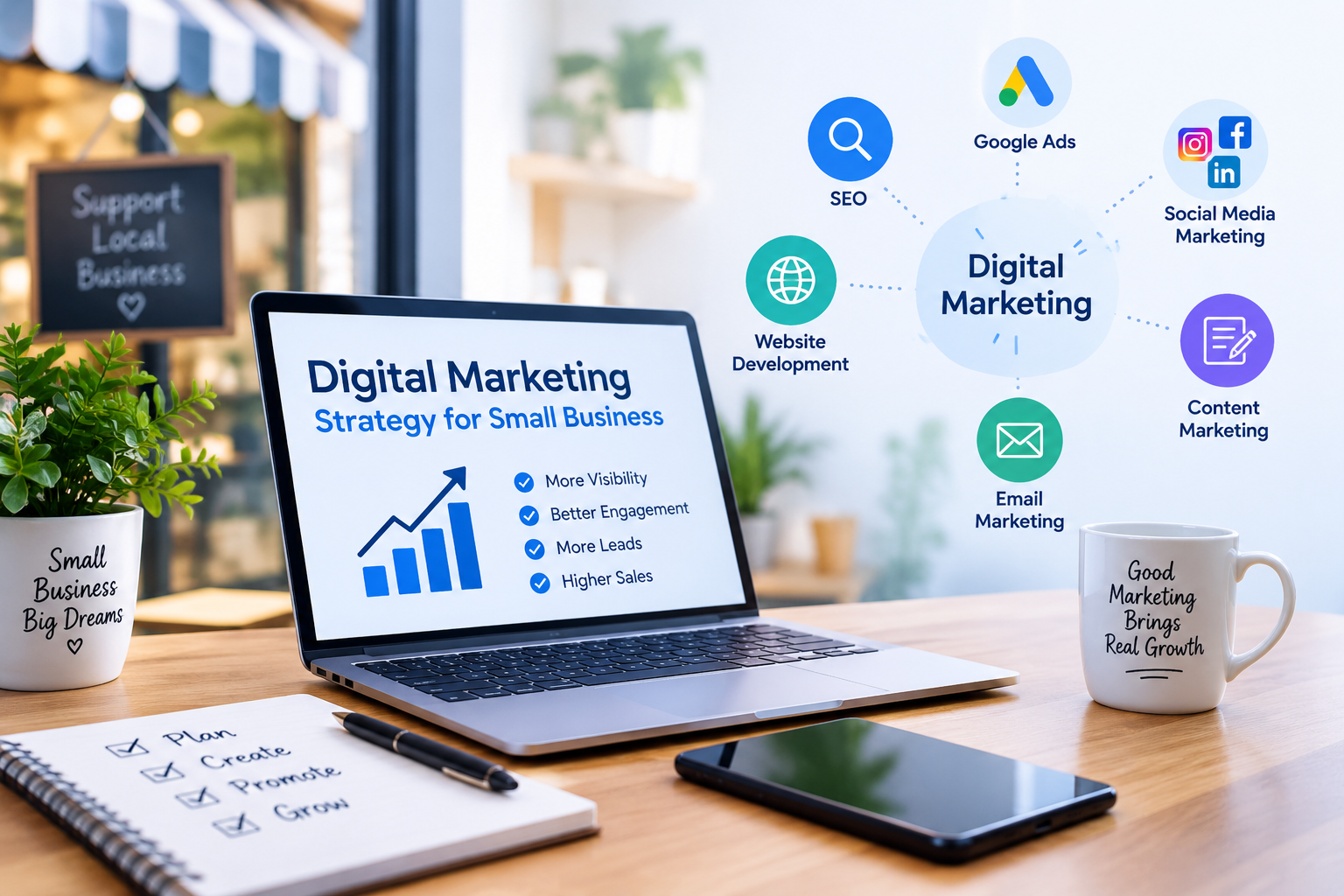
Running a small business often means working with a limited budget, a small team, and fewer resources than larger competitors. Because of this, every marketing decision needs to have a clear purpose. Instead of trying to be visible everywhere, small businesses can focus their efforts on the channels and activities that are most relevant to their customers.
A well-planned marketing strategy can help a small business explain what makes it different, connect with the right audience, attract new opportunities, and build a stronger position within its market.
A great product or service cannot generate consistent business if potential customers cannot find it. Marketing helps small businesses become more visible across the places where their target audience spends time and searches for solutions.
A professional website, well-optimized Google Business Profile, active social media accounts, helpful blog content, and a strong local presence can all contribute to better discoverability. When customers can easily find useful information about a business online, they are more likely to consider it as an option.
Effective marketing is not about reaching the largest possible audience. It is about reaching people who are most likely to need and value what the business offers.
Businesses can use customer research, website behaviour, search trends, social media interactions, reviews, and feedback to understand their audience more clearly. These insights can help businesses create more relevant messages and focus their resources on potential customers with genuine interest.
Trust plays an important role when customers are deciding which business to choose. A professional digital presence can help a small business communicate reliability and credibility.
Helpful website information, genuine customer reviews, informative content, regular social media activity, clear contact details, and consistent branding can create a more trustworthy impression. When customers see that a business is active, transparent, and focused on providing value, they may feel more confident taking the next step.
Marketing should not stop after attracting a new customer. Consistent communication can help businesses stay connected with their existing audience.
Email updates, social media conversations, useful content, customer support, special offers, and personalized communication can encourage customers to remain engaged with the brand. Strong relationships can also increase repeat purchases and customer recommendations.
The purpose of small business marketing is not simply to generate short-term attention. A well-organized strategy can create a repeatable system for attracting, engaging, and retaining customers.
By combining online visibility, audience targeting, valuable content, customer engagement, and performance measurement, a small business can make better marketing decisions and gradually build a stronger customer base.
The most effective approach is to start with clear goals, understand the target audience, choose suitable marketing channels, and regularly evaluate what is working. Over time, consistent and focused marketing can help a small business compete more confidently and create a foundation for sustainable growth.
A professional website is one of the most important parts of small business marketing. Your website gives potential customers a place to learn about your products or services, understand your brand, and contact your business. Make sure your website is easy to navigate, mobile-friendly, fast-loading, and clearly explains what your business offers. Add important information such as your services, contact details, business location, customer reviews, and clear calls to action. A well-designed website can help build trust and turn visitors into potential customers.
Keeping your business information consistent across the internet can improve customer trust and make your business easier to find. Use the same business name, phone number, address, website URL, and other important details across your website, social media profiles, business directories, and local listings. Accurate information helps customers contact you easily and reduces confusion. It also supports your local search visibility and gives search engines clearer information about your business.
Social media can help small businesses connect with customers and build a stronger online presence. Choose the platforms where your target customers are most active instead of trying to manage every social network. Share useful content, product updates, educational posts, customer stories, behind-the-scenes content, and special offers. Respond to comments and messages regularly to create meaningful conversations with your audience. Consistent social media activity can increase brand awareness and help more people discover your business.
Online reviews can strongly influence the buying decisions of potential customers. Encourage satisfied customers to share honest feedback about their experience with your business. Display genuine reviews on your website and maintain your business profiles on relevant platforms. Always respond professionally to both positive and negative reviews. Showing that you value customer feedback can strengthen your reputation and encourage new customers to choose your business.
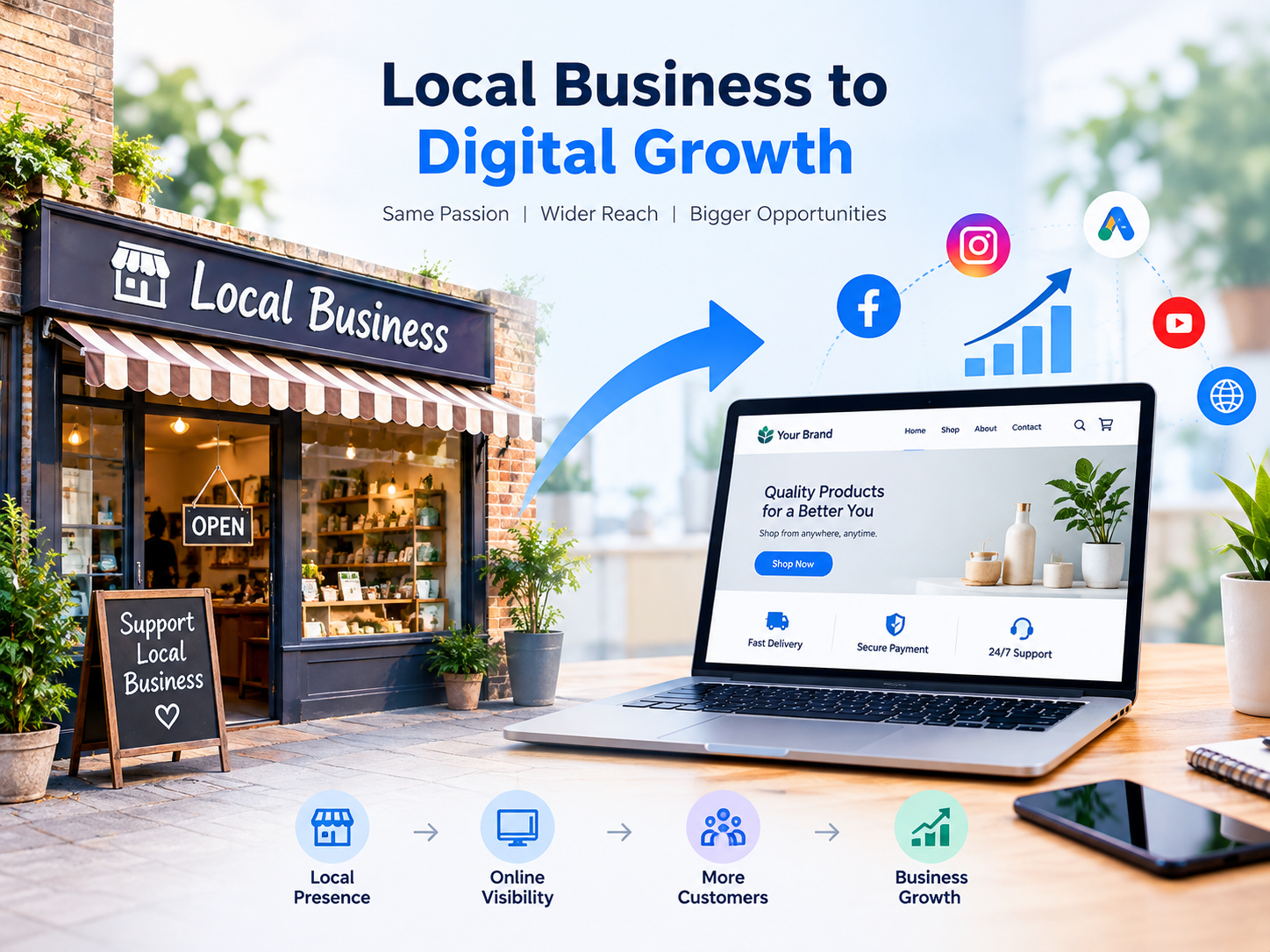
Local keywords help your business reach people who are searching for products or services in your area. Research phrases that your potential customers may use when looking for businesses like yours. Include relevant location-based keywords naturally in your website content, page titles, headings, service pages, and descriptions. Avoid using the same keyword too many times. Focus on creating useful content that answers customer questions and clearly explains how your business can help.
Your website should be optimized so both customers and search engines can easily understand your business. Use clear page titles, useful headings, descriptive URLs, relevant content, and natural keywords throughout your pages. Make sure your website works properly on mobile devices and loads quickly. Add clear contact information and calls to action so visitors can easily take the next step. A well-optimized website can improve your visibility and create a better experience for potential customers.
A Google Business Profile can help local customers discover your business when they search online. Keep your business name, address, phone number, website, opening hours, services, and other information accurate and up to date. Add high-quality business photos and regularly monitor customer reviews. Keeping your profile active and accurate can improve your local online presence and make it easier for potential customers to contact or visit your business.
Creating useful SEO content can help your small business attract people who are actively looking for information, products, or services related to your industry. Write blog posts, service pages, guides, FAQs, and other helpful content based on real customer questions. Use relevant keywords naturally and focus on providing clear and valuable information. Regularly publishing useful content can increase website visibility, attract organic traffic, build authority, and create more opportunities for leads and sales.
Social Media Marketing for Small Businesses
Social platforms have created a valuable opportunity for small businesses to stay connected with the people they want to serve. Instead of relying only on traditional advertising, businesses can use platforms such as Instagram, Facebook, LinkedIn, and other social networks to introduce their brand, demonstrate their products or services, educate audiences, and start meaningful conversations.
However, successful social media is not simply about publishing a large number of posts. Consistency, relevance, and content quality are much more important than posting just for the sake of being active.
Create Content Around Customer Needs
Before planning social media content, small businesses should understand what their audience actually finds useful. Knowing customer questions, problems, interests, and preferences makes it easier to create content that attracts attention and encourages engagement.
Different types of content can serve different purposes, including:
Educational tips and how-to content
Product or service demonstrations
Customer stories and experiences
Frequently asked questions
Behind-the-scenes updates
Industry news and insights
Helpful short-form videos
A good content mix keeps the brand informative without making every post feel like a direct advertisement.
Use Visual Content to Capture Attention
Visual communication can help small businesses explain their products and ideas quickly. High-quality photographs, short videos, reels, infographics, and branded graphics can make content easier to understand and more memorable.
However, every piece of content should have a clear objective. One post might introduce the brand, another might educate the audience, while another could encourage users to visit the website or send an enquiry.
Turn Social Media Into a Conversation
Social media becomes more valuable when businesses use it for communication rather than one-way promotion. Replying to comments, answering direct messages, acknowledging feedback, and participating in relevant conversations can create a stronger connection with customers.
These interactions can also provide valuable information. Questions and comments from followers may reveal what customers want, what they find confusing, and which products or services they are most interested in.
Explore Paid Social Advertising
Organic content is not the only way for small businesses to reach audiences. Paid social advertising can help businesses show selected content to specific groups based on factors such as location, interests, demographics, and other available targeting options.
A small business can begin with a focused campaign, define a clear objective, monitor the results, and make adjustments based on performance. This approach can help businesses avoid spending their entire budget without understanding what is working.
Connect Social Media With the Overall Marketing Strategy
Social media should not operate independently from the rest of the business's marketing activities. It can work alongside a website, SEO, content marketing, email campaigns, paid advertising, and customer communication.
For example:
Social Media Content → Website Visit → Useful Information → Enquiry → Customer
When these channels support one another, social media can become more than a platform for gaining followers. It can help create awareness, strengthen relationships, generate opportunities, and contribute to long-term business development.
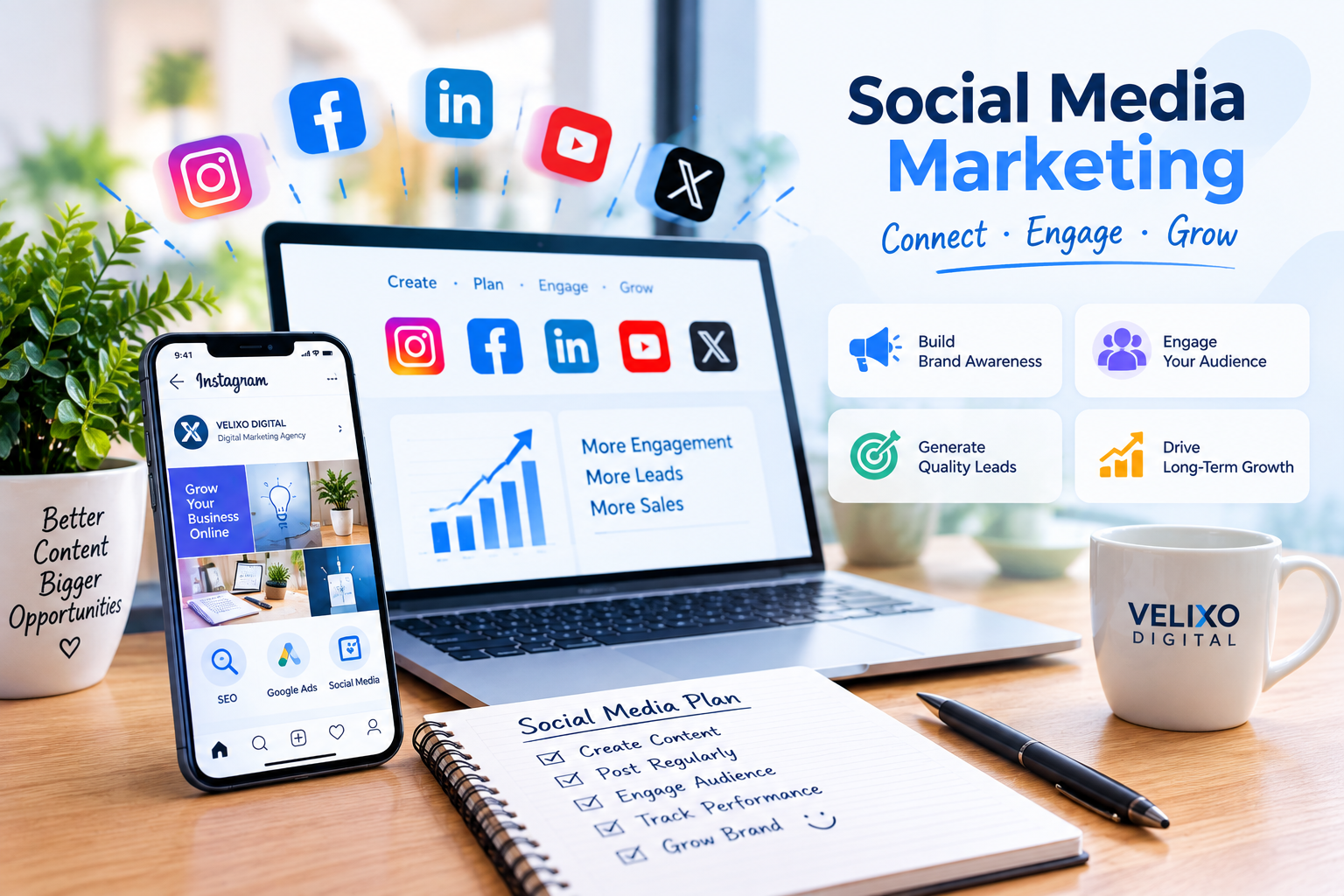
Organic marketing strategies such as SEO can take time to build visibility, while paid advertising can help a small business reach potential customers more quickly. Google Ads allows businesses to display advertisements when people search for products, services, or solutions related to what the business offers.
One advantage of Google Ads is the ability to target specific search terms and audiences. A local business can focus its advertising on selected locations and relevant keywords instead of showing ads to everyone. This can help businesses reach people who already have an interest or need related to their products or services.
A successful campaign starts with clear goals. A business may want to generate phone calls, website enquiries, bookings, store visits, or online purchases. Choosing the right campaign objective makes it easier to create relevant ads and measure performance.
The landing page is equally important. When someone clicks an advertisement, they should arrive on a page that clearly matches the promise made in the ad. The page should explain the service, highlight important benefits, provide trust signals, and include a simple call to action such as Contact Us, Request a Quote, or Book a Consultation.
Small businesses should also monitor their advertising results regularly. Metrics such as clicks, conversions, cost per lead, and return on advertising spend can provide useful insights into campaign performance. Poorly performing keywords or advertisements can be adjusted instead of continuing to spend money without improvement.
As part of Small Business Marketing, Google Ads can work particularly well when combined with SEO, a strong website, and effective conversion-focused landing pages. Paid advertising can bring immediate opportunities, while organic strategies can support sustainable visibility over the longer term.
Content marketing helps small businesses communicate their knowledge, solve customer problems, and give people a reason to interact with their brand. Instead of focusing only on selling, businesses can create content that answers questions and provides useful information related to their products or services.
A simple starting point is a business blog. Blog posts can explain common customer questions, provide practical tips, compare solutions, or share industry information. This type of content can also support SEO by creating more relevant pages for search engines to discover.
Businesses can use different content formats depending on their audience. Short social media posts, videos, infographics, email newsletters, case studies, guides, and FAQs can all be part of a content strategy. The most important thing is that the content should be useful, easy to understand, and connected to the audience's needs.
Consistency is also important. A business does not need to publish large amounts of content every day. A realistic schedule with useful content created regularly can be more effective than publishing frequently without a clear purpose.
Good content should also include a clear next step. For example, a helpful article can guide readers toward a related service page, contact form, product page, or consultation. This allows content to support both customer education and business goals.
As part of Small Business Marketing, valuable content can help a brand become more recognizable, demonstrate expertise, attract organic traffic, and build stronger relationships with potential customers.
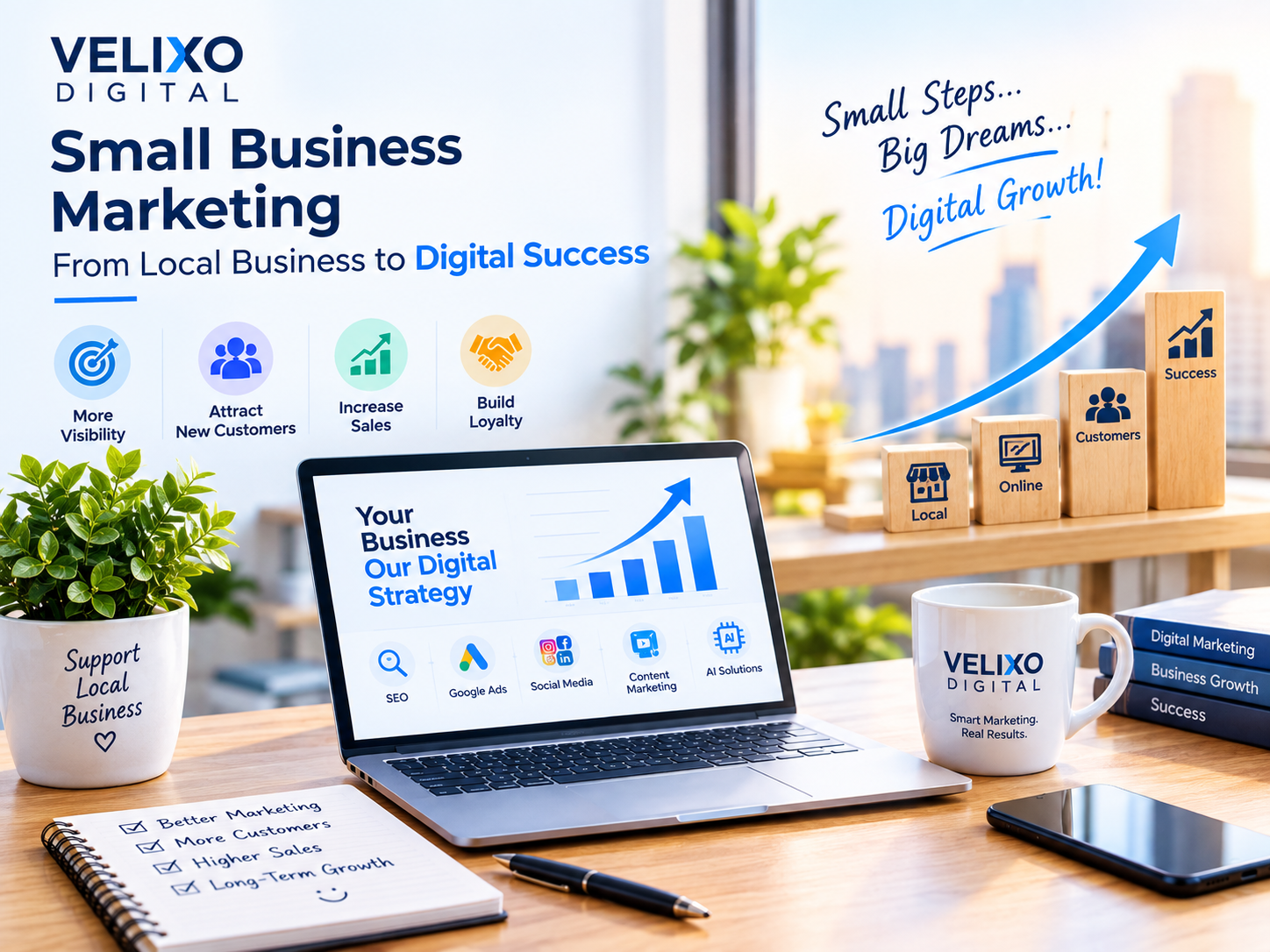
Getting a new customer is important, but keeping that customer connected with your business can be even more valuable. Trust plays a major role in a customer's decision to choose one business over another. Small businesses can build trust by being transparent, consistent, responsive, and focused on delivering a positive customer experience.
Start by clearly communicating what your business offers. Your website, social media profiles, advertisements, and other marketing channels should provide consistent information. Avoid making promises that your business cannot deliver. Honest communication helps create realistic customer expectations.
Customer reviews can also influence buying decisions. Encourage satisfied customers to share genuine feedback about their experience. Displaying authentic reviews on appropriate platforms can help potential customers understand what they can expect from your business.
Communication after a purchase is another useful way to strengthen relationships. Follow-up messages, helpful tips, special offers, newsletters, or updates can keep your brand connected with existing customers. However, communication should remain relevant rather than becoming excessive or repetitive.
Personalization can make customer interactions more meaningful. Simple actions such as addressing customers by name, remembering their preferences, or recommending relevant products can make a business feel more customer-focused.
A successful Small Business Marketing strategy should therefore focus not only on attracting attention but also on creating experiences that encourage customers to return. Loyal customers can become repeat buyers and may also recommend the business to friends, family, or colleagues.
Marketing becomes more effective when a business understands what is working and what needs improvement. Instead of judging a campaign only by likes or views, small businesses should track meaningful results that are connected to their actual goals.
Start by deciding what you want to achieve. Your goal might be to increase website visitors, generate enquiries, receive phone calls, gain new customers, or increase online sales. Once the goal is clear, you can choose the right metrics to monitor.
For website performance, businesses can look at important information such as website traffic, popular pages, enquiries, and conversions. For social media, engagement, profile visits, clicks, and audience growth can provide useful insights. For paid advertising, metrics such as clicks, conversion rate, cost per lead, and advertising spend can help evaluate campaign efficiency.
It is also useful to compare results over time rather than making decisions from a single day's performance. Some marketing activities need time before meaningful patterns become visible. Regular reviews can help identify which channels are bringing valuable customers and where resources may need to be adjusted.
A simple monthly marketing report can make this process easier. Record your main activities, spending, traffic, leads, conversions, and important observations. Based on these results, you can improve future campaigns and focus more attention on strategies that deliver genuine business value.
Good Small Business Marketing is not about spending the most money. It is about understanding your results, learning from customer behavior, and continuously improving your approach.
A successful marketing strategy is not only about knowing what to do; it is also about knowing what to avoid. Small businesses often have limited time, money, and manpower, so an ineffective marketing decision can have a bigger impact on overall growth. By identifying common mistakes early, businesses can use their resources more wisely and build a more focused marketing approach.
Trying to Be Active on Every Platform
One common mistake is attempting to maintain a presence on every available marketing platform. Managing multiple social networks, websites, advertising channels, and communication tools can quickly become difficult for a small team.
Instead, identify where your ideal customers spend the most time and concentrate your efforts there. A strong presence on a few relevant channels is generally more valuable than having inactive or poorly managed profiles everywhere.
Creating Content Without a Clear Audience
Content becomes more effective when it is created with a specific audience in mind. Posting random topics without understanding customer needs can result in low engagement and limited business value.
Before creating content, consider what your customers are searching for, what questions they ask, what challenges they face, and what information could help them make better decisions. This allows businesses to create content that is more relevant and useful.
Maintaining an Inconsistent Brand Identity
A business can lose credibility when its branding looks different across various platforms. Differences in logos, colors, business names, messaging, contact information, or visual style can make the brand difficult to recognize.
Keep important brand elements consistent across your website, social media profiles, advertisements, emails, and other marketing channels. Consistency helps create a more professional and memorable identity.
Overlooking Customer Feedback
Customer feedback is a valuable source of information, yet some businesses fail to use it effectively. Reviews, comments, questions, complaints, and direct enquiries can reveal what customers appreciate and where improvements may be needed.
Rather than treating feedback only as criticism or praise, use it as a source of insight. It can help improve your products, services, communication, website experience, and future marketing content.
Focusing Only on Immediate Sales
Generating revenue is an important business objective, but not every marketing activity needs to produce an immediate sale.
Some campaigns are designed to introduce a brand, educate an audience, build trust, or maintain relationships with existing customers. A balanced strategy should consider both short-term conversions and long-term customer value.
Spending on Advertising Without Measuring Results
Investing in advertising without tracking performance can make it difficult to understand where your money is going. Simply setting an advertising budget does not guarantee useful results.
Businesses should define measurable objectives and monitor relevant indicators such as traffic, enquiries, conversions, acquisition costs, or sales. This information can help identify what is performing well and where changes may be necessary.
Changing Strategies Too Frequently
Another common mistake is abandoning a marketing strategy too quickly. Some activities need time and consistent execution before meaningful patterns become visible.
Instead of making frequent changes based on assumptions, businesses should establish clear goals, collect useful data, evaluate performance, and then make informed adjustments.
Building a Better Marketing Approach
Avoiding these mistakes can help small businesses become more focused and efficient with their marketing resources. The goal is not to do everything at once, but to understand your audience, choose suitable channels, communicate consistently, listen to customers, and measure meaningful results.
1. What is Small Business Marketing?
Small Business Marketing is the process of promoting a small business to attract customers, increase brand awareness, generate leads, and support business growth through online and offline marketing strategies.
2. Why is marketing important for a small business?
Marketing helps small businesses become more visible, reach potential customers, communicate their value, and compete with other businesses in their market.
3. How can a small business attract more local customers?
A business can use local SEO, Google Business Profile, social media, customer reviews, local content, and targeted advertising to reach customers in its area.
4. Is SEO useful for small businesses?
Yes. SEO can help a small business improve its visibility in search results and attract people who are actively searching for related products or services.
5. How does social media help small businesses?
Social media helps businesses showcase their products or services, communicate with customers, share useful content, increase brand awareness, and build stronger customer relationships.
6. Should small businesses use Google Ads?
Google Ads can be useful when a business wants to reach people who are actively searching for specific products or services. Businesses can set budgets and measure campaign performance.
7. How much should a small business spend on marketing?
The right Small Business Marketing budget depends on the business goals, target audience, industry, available resources, and expected results.
8. How long does Small Business Marketing take to show results?
The timeframe depends on the strategy. Paid advertising can generate results relatively quickly, while SEO, content marketing, and brand-building usually require consistent effort over a longer period.
9. Which marketing strategy is best for a small business?
There is no single strategy that works for every business. A combination of SEO, social media, content marketing, local marketing, and paid advertising can be selected according to the business's goals and audience.
10. How can a small business measure marketing success?
A business can track website traffic, leads, enquiries, calls, conversions, sales, social media engagement, and advertising costs to understand whether its marketing activities are producing useful results.